
What Is LogicProfitBlock?
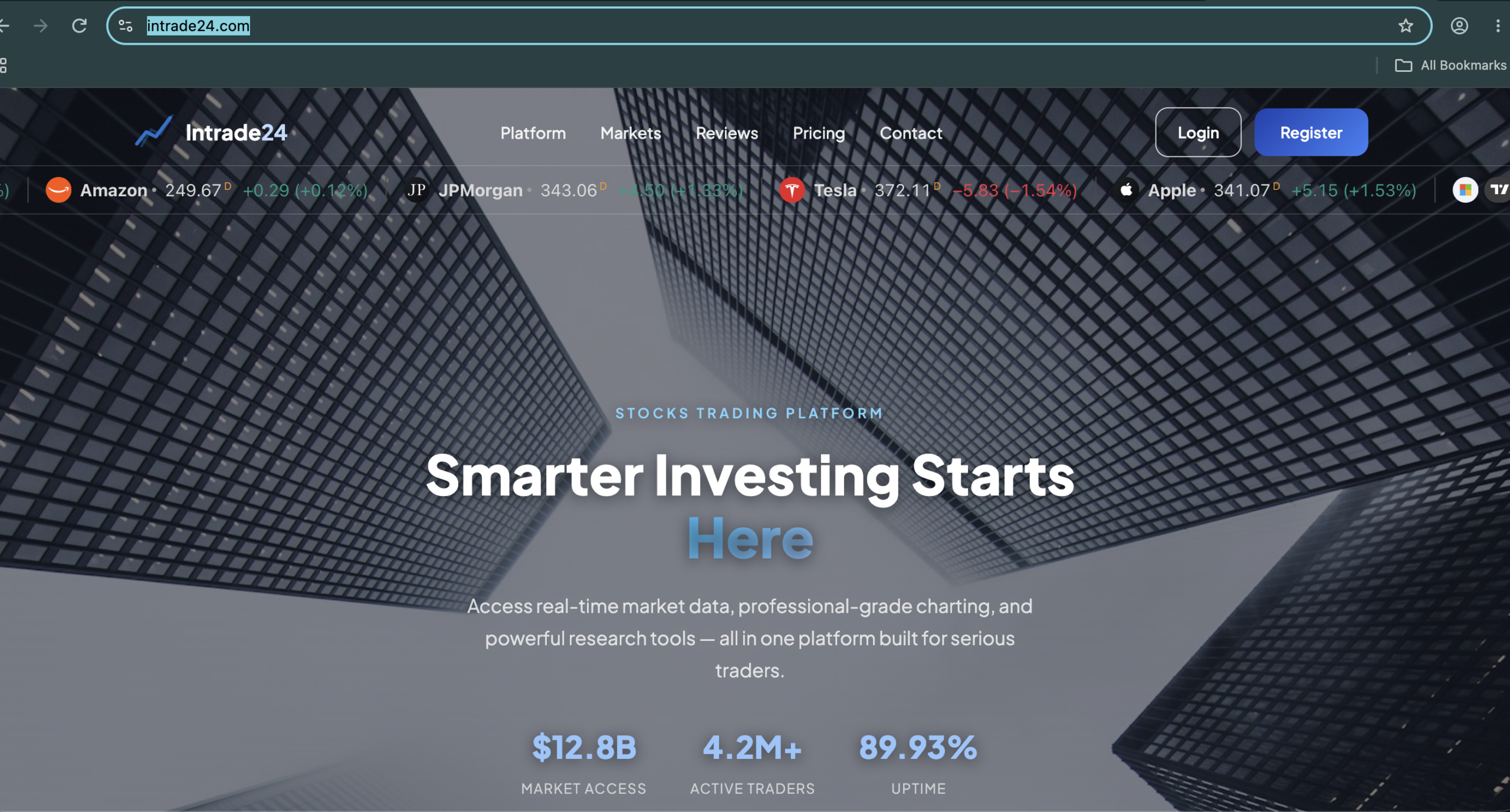
LogicProfitBlock presents itself as an investment/trading platform associated with financial markets.
The important point for an investor is not simply what a platform calls itself.
A website can describe itself as a broker, investment company, crypto platform, automated trading service or financial technology business. Those descriptions do not establish that the business is authorised to provide regulated financial services.
The first question should therefore be:
Who is legally operating the platform, and which financial regulator has authorised that entity to provide the services being offered?
That question becomes particularly important with Logicprofitblock.com because of the AMF warning.
The regulator did not simply publish a general warning about online trading. It specifically identified Logicprofitblock.com and stated that it was not registered with the AMF and was not authorized to solicit Québec investors.
The Most Important Warning: Regulatory Status
The strongest publicly verified concern surrounding Logicprofitblock.com is its regulatory status.
The AMF’s 28 August 2026 warning places Logicprofitblock.com among platforms that the regulator categorises as high risk. It identifies cryptoassets and forex as relevant categories and states that the platform is not registered with the AMF and is not authorised to solicit investors in Québec.
This matters because registration is not simply a badge that an investment website can add to its homepage.
Authorisation allows investors to determine whether a firm has been assessed by the appropriate regulator and whether it is permitted to perform particular financial activities within a particular jurisdiction.
Without that verification, an investor may have difficulty determining:
- who legally controls the company;
- where client money is actually held;
- whether client funds are segregated;
- who supervises the firm’s activities;
- what complaints procedure applies;
- what investor protections may be available;
- whether the people providing investment advice are authorised;
- and what happens if the company stops responding.
This is why checking the regulator’s register should come before depositing money rather than after a problem develops.
An Important Jurisdictional Point
The AMF warning specifically concerns Québec.
That means the statement should not be exaggerated into something it does not say.
The regulator’s published finding is that LogicProfitBlock is not registered with the AMF and is not authorised to solicit investors in Québec.
It does not automatically establish that every person worldwide who interacted with the platform was defrauded.
Likewise, the absence of an FCA warning located during this review should not be interpreted as FCA approval.
For a UK investor, the appropriate question is whether the actual legal entity behind the platform is authorised by the UK’s relevant regulator to provide the particular financial services being offered.
This is a crucial distinction.
A company saying that it has a London connection is not the same thing as being an FCA-authorised investment firm.
Why a Professional Website Is Not Enough
One of the biggest mistakes investors make is judging legitimacy from appearance.
A website can have:
- professional graphics;
- market charts;
- account dashboards;
- trading terminology;
- customer-support representatives;
- cryptocurrency terminology;
- supposed performance statistics;
- certificates or company information;
- secure HTTPS connections.
None of these things independently establishes regulatory authorization.
Even a genuine SSL certificate only tells you that communication with the website is encrypted. It does not tell you that the company operating the website is legitimate or regulated.
Independent website-reputation services have also identified a number of caution indicators around the Logicprofitblock.com domain, including its recent registration and limited online history. Those services should be treated as secondary indicators rather than proof of fraud.
The regulatory warning is substantially more important than a website-rating score.
The Problem With New Investment Platforms
A recently established investment website does not automatically mean that it is fraudulent.
New legitimate financial businesses exist.
However, investors should become more cautious when a platform combines a short operating history with claims involving high returns, cryptocurrency, forex or sophisticated trading technology.
One secondary domain assessment reported that logicprofitblock.com was registered on 31 July 2026, meaning the domain was very new when the AMF warning was issued in August.
A short domain history should therefore be treated as one verification question:
How can a company claiming substantial investment experience demonstrate a credible operating history if its website domain is only recently established?
That question does not prove wrongdoing. It simply means the investor should demand stronger independent evidence.
Do Not Confuse an Account Balance With Real Money
This is one of the most important lessons for anyone dealing with an unfamiliar investment platform.
Suppose an investor deposits £5,000 and the dashboard later shows:
Account balance: £18,750
That number may feel reassuring.
But the dashboard is controlled by the platform.
The real test is whether the investor can independently withdraw funds without being required to send additional money.
A displayed balance is not the same as money sitting safely in a bank account in the investor’s name.
Investors should therefore ask:
- Can I withdraw without paying another deposit?
- Who actually holds my money?
- Which bank or regulated custodian holds it?
- Is the balance independently verifiable?
- Are withdrawals governed by a documented procedure?
- Can the platform explain exactly where client funds are held?
If the only evidence of wealth is a number displayed after logging into the platform, investors should remain cautious.
Be Extremely Careful With Withdrawal Problems
Withdrawal difficulties are among the most serious warning signs associated with questionable investment platforms.
A common pattern in investment fraud cases is that depositing money appears simple, while withdrawing money becomes increasingly complicated.
An investor may be told that additional money is needed for:
- taxes;
- account verification;
- liquidity requirements;
- insurance;
- compliance;
- blockchain processing;
- withdrawal activation;
- account upgrades;
- security deposits;
- anti-money-laundering checks.
The terminology can sound legitimate.
The important question is:
Why must an investor send additional money to obtain money that supposedly already belongs to them?
A request for a fee does not automatically prove fraud in every financial situation. Genuine financial services can involve legitimate charges.
But an unexpected demand for additional payment before releasing an apparently available balance is a major reason to stop and independently verify the situation.
Beware of Pressure From an “Account Manager”
Investors should be particularly cautious if someone connected with a platform repeatedly contacts them and encourages larger deposits.
Pressure can take many forms:
- “This opportunity is only available today.”
- “You need to increase your balance.”
- “Your account is almost eligible for withdrawal.”
- “The market is moving right now.”
- “You will lose your profits if you don’t act.”
- “This is a guaranteed opportunity.”
- “You need to deposit more before we can process your withdrawal.”
Legitimate investment decisions should not depend on emotional urgency.
A useful personal rule is simple:
Never transfer additional money simply because the person managing your account tells you that you must do so immediately.
Pause.
Verify the company independently.
Then decide.
Why Crypto and Forex Require Extra Verification
Logicprofitblock.com has been identified by the AMF under categories including cryptoassets and forex.
Both areas can involve legitimate businesses, but they also provide opportunities for misleading investment schemes because they can appear technically sophisticated to inexperienced investors.
Cryptocurrency transactions can also create additional recovery difficulties.
Once cryptocurrency is transferred to another wallet, reversing the transaction may not be possible through the normal banking system.
That makes prevention especially important.
Before sending cryptocurrency to an investment platform, investors should establish:
- Who owns the receiving wallet?
- Why is cryptocurrency being sent there?
- Is the recipient a regulated business?
- What legal entity operates the service?
- Can the recipient be independently verified?
- What happens if the withdrawal is refused?
- Is the platform asking the investor to send crypto directly to a personal wallet?
If these questions cannot be answered clearly, depositing should be reconsidered.
How Investors Can Avoid Platforms Like LogicProfitBlock
1. Check the regulator before the website
Do not begin with the platform’s own website.
Begin with the regulator.
Search for the legal company name, trading name and relevant individuals in the appropriate regulatory register.
For UK investors, that means checking the FCA’s official records and considering whether the specific activity being offered requires authorisation.
For Canadian investors, the relevant provincial or territorial securities regulator should be checked.
The principle is universal:
Verify the licence independently rather than accepting a licence number supplied by the platform.
2. Find the actual legal entity
“LogicProfitBlock” is a brand name.
The investor needs to know the legal entity behind the brand.
Look for:
- registered company name;
- company number;
- registered office;
- country of incorporation;
- directors;
- regulatory license;
- regulator;
- license number;
- permitted activities.
Then independently compare those details with official records.
A professional-looking company page is not enough.
3. Check whether the license covers the service
A company may genuinely exist without being authorized to provide the investment service being advertised.
For example, a company might be authorized for one type of financial activity but not for another.
Therefore:
Company registration ≠ financial authorization.
And:
Financial authorisation ≠ authorization for every financial product.
The specific service must match the specific permission.
4. Never Treat Positive Reviews as Regulatory Evidence
Reviews can be useful for identifying patterns, but they should not be the primary test of legitimacy.
A platform may have:
- positive testimonials;
- five-star reviews;
- social-media followers;
- promotional videos;
- supposed customer success stories.
None of these proves that the company is authorised.
Conversely, one negative review does not establish that a company is fraudulent.
Investors should give substantially more weight to independent regulatory records, verified corporate information and independently verifiable custody arrangements.
5. Test the Withdrawal Process Before Committing Significant Money
If an investor decides to use a new platform despite completing the necessary checks, they should understand the withdrawal procedure before committing substantial funds.
Ask:
- What is the minimum withdrawal?
- How long does it take?
- Are there withdrawal fees?
- Where does the withdrawal originate?
- Is the money held in a segregated account?
- Are withdrawals processed by the same legal entity?
- What documentation is required?
Most importantly, investors should never assume that a successful deposit means a successful withdrawal.
6. Do Not Borrow Money to Invest
An account manager should never need to persuade an investor to:
- take a loan;
- use a credit card;
- borrow from relatives;
- refinance a property;
- sell essential assets;
- or transfer emergency savings.
The greater the financial pressure, the more important it becomes to slow down.
A legitimate investment opportunity will still deserve independent verification.
7. Never Give Remote Access to Your Computer
Investors should be extremely cautious if someone connected with an investment platform asks them to install remote-access software.
Never allow an unknown investment representative to control:
- your banking application;
- your email;
- your cryptocurrency exchange;
- your password manager;
- your computer;
- your authentication application.
Never disclose:
- passwords;
- banking PINs;
- one-time authentication codes;
- private cryptocurrency keys;
- recovery phrases.
A genuine financial adviser does not need your banking password or cryptocurrency seed phrase.
8. Be Careful After Losing Money: Recovery Scams
There is another danger that often appears after an investor discovers a problem.
Someone may contact the victim claiming:
“We can recover your funds.”
They may describe themselves as:
- recovery agents;
- blockchain investigators;
- government representatives;
- lawyers;
- financial investigators;
- cybercrime specialists;
- cryptocurrency tracing experts.
Some may even know the exact amount the victim lost.
That does not prove they are legitimate.
A second fraud can begin with information obtained from the first victimisation.
Be especially cautious if the supposed recovery specialist demands:
- an upfront payment;
- cryptocurrency;
- a “release fee”;
- remote computer access;
- banking credentials;
- wallet recovery phrases;
- or a percentage paid before any verifiable work occurs.
If You Have Already Deposited Money
If you have already invested with LogicProfitBlock or a similar platform, avoid making the situation worse by sending additional money simply because someone promises that it will unlock your existing balance.
Instead:
Preserve evidence
Save:
- screenshots of your account;
- account statements;
- deposit receipts;
- bank records;
- cryptocurrency transaction hashes;
- wallet addresses;
- emails;
- WhatsApp messages;
- Telegram conversations;
- phone numbers;
- names used by representatives;
- contracts;
- withdrawal requests;
- responses from customer support.
Contact your payment provider
If money was sent by card or bank transfer, contact the relevant financial institution as soon as possible.
Explain that you believe the transaction may be connected to an investment fraud and ask what recovery, recall or dispute options remain available.
Time can matter.
Report the matter
Where appropriate, report the platform to the financial regulator and relevant fraud-reporting authority in your jurisdiction.
The information you provide may help regulators identify patterns involving the same operators, domains, payment accounts or individuals.
Do not pay a second “recovery” company automatically
Take time to verify anyone who approaches you after the loss.
A Simple 60-Second Investor Check
Before sending money to an unfamiliar investment platform, ask:
| Question | If the answer is unclear |
|---|---|
| Who legally operates the platform? | Stop and investigate |
| Is the company regulated? | Do not deposit until verified |
| Does the regulator confirm the licence? | Treat claims on the website as unverified |
| Does the licence cover the advertised service? | Investigate further |
| Where is client money held? | Ask for independently verifiable evidence |
| Can I withdraw without sending more money? | Treat additional-payment demands as a major warning |
| Am I being pressured to deposit? | Stop and take time |
| Is the company asking for crypto to a personal wallet? | Do not proceed until independently verified |
| Am I being asked for passwords or remote access? | Refuse |
| Am I being promised unusually high or guaranteed returns? | Treat the claim with extreme caution |
Final Assessment
Logicprofitblock.com deserves serious caution because there is an official regulatory warning concerning the platform.
The AMF published its warning on 28 August 2026, stating that LogicProfitBlock is not registered with the AMF and is not authorised to solicit investors in Québec. The regulator categorized it as a high-risk platform involving cryptoassets and forex.
The Canadian Securities Administrators’ investor-alert database independently records the same warning and identifies London as the purported base of operation associated with the alert.
That does not mean every statement found online about Logicprofitblock.com should automatically be accepted as fact. There is still limited publicly verified information about the entity behind the platform, and the absence of an FCA warning found during this review should not be mistaken for UK authorization.
The most important lesson for investors is broader than Logicprofitblock.com itself.
Do not judge an investment platform by its dashboard, branding, trading charts, customer service or promises of profit.
Judge it by independently verifiable facts:
Who operates it?
Who regulates it?
What license does it have?
Does that license cover the service being offered?
Where is the money held?
And can the investor withdraw without being pressured to send additional funds?
If those questions cannot be answered independently, the safest decision is to pause before transferring money.
For investors, prevention is usually far easier than attempting to recover funds after they have been transferred.