
Introduction
Choosing an investment platform is about much more than finding a website that looks professional.
For an investor, the real questions are much more important:
Who operates the platform? Is it regulated? Is the license genuine? Where is the money held? Can withdrawals be made without sending additional funds? And what protection exists if something goes wrong?
These questions are particularly important when dealing with Silverline Partners, associated with the domain silverlinepartners.net.
The platform was the subject of an official investor warning issued by the Autorité des marchés financiers (AMF) on 28 August 2026. The AMF classified Silverlinepartners.net as a high-risk platform and stated that it is not registered with the AMF and is not authorised to solicit investors in Québec.
The Canadian Securities Administrators (CSA) also records the same investor alert and identifies silverlinepartners.net as the website associated with the warning.
That regulatory finding is the central issue investors should understand.
It does not mean that every statement made online about Silverlinepartners.net is automatically true, nor does it establish that every person who encountered the website lost money.
It does mean that investors should not treat Silverlinepartners.net as an authorised investment firm in Québec and should conduct extensive independent verification before sending funds.
Silverline Partners: Risk Snapshot
| Area | Finding |
|---|---|
| Platform name | Silverline Partners |
| Website identified by regulator | silverlinepartners.net |
| Regulator issuing warning | Autorité des marchés financiers (AMF) |
| Warning date | 28 August 2026 |
| AMF registration | Not registered |
| Authorisation to solicit Québec investors | Not authorised |
| Regulatory classification | High-risk platform |
| CSA investor alert | Confirmed |
| Main concern | Lack of required Québec registration/authorisation |
| Investor approach | Independent verification strongly recommended |
The AMF’s warning is the most important piece of independently verified information concerning the platform.
What Is Silverline Partners?
The name Silverlinepartners.net sounds conventional and financially oriented.
That is precisely why investors should avoid making assumptions based on the name alone.
Words such as:
- Partners
- Capital
- Investments
- Wealth
- Holdings
- Financial
- Asset Management
- Securities
are frequently used by legitimate companies.
They can also be used by businesses that have no financial regulatory authorisation.
The name of a platform therefore tells an investor very little.
The more important question is:
Which legal entity is actually taking your money?
An investor should be able to identify the company’s:
- full legal name;
- incorporation jurisdiction;
- company registration number;
- physical business address;
- directors or responsible individuals;
- financial regulator;
- licence number;
- authorised activities;
- client-money arrangements.
If those details cannot be independently verified, the investor should stop before making a significant deposit.
The AMF Warning Is the Most Important Red Flag
The AMF published its warning against Silverlinepartners.net on 28 August 2026.
According to the regulator, Silverlinepartners.net is not registered with the AMF and is not authorised to solicit investors in Québec. The regulator specifically associates the warning with silverlinepartners.net.
The CSA investor-alert database independently records the AMF warning and repeats the same registration finding.
This distinction matters.
A website may claim to be:
- international;
- privately managed;
- based in London;
- independent;
- offshore;
- technology-driven;
- operating through another jurisdiction.
None of those descriptions replaces regulatory authorization where authorization is required.
An investor should always verify the specific legal entity and the specific activity rather than relying on a company’s own description.
Do Not Confuse the Brand With Other “Silverline Partners” Businesses
This is an especially important point with this platform.
“Silverline Partners” is a relatively generic business name, and unrelated organisations may use similar names.
The AMF warning specifically identifies silverlinepartners.net.
Therefore, an investor should not automatically assume that every company called Silverline Partners is connected to the warning.
This also works in reverse.
Finding a legitimate company elsewhere with a similar name does not prove that silverlinepartners.net is legitimate.
When investigating a platform, always record the exact:
- website address;
- email domain;
- company name;
- telephone number;
- payment recipient;
- cryptocurrency wallet;
- bank-account beneficiary.
The exact identity of the entity matters much more than the brand name appearing on the screen.
Why Regulatory Registration Matters
Some investors believe regulation is simply a formality.
It is not.
Regulatory oversight can provide important information about:
- who operates the business;
- which activities it is permitted to conduct;
- who is responsible for compliance;
- how client funds should be handled;
- how complaints can be made;
- what protections may be available.
Without appropriate registration, investors may have considerably fewer avenues for protection if a dispute arises.
This is why the AMF specifically tells investors to consult its registers before dealing with an investment firm.
The lesson is straightforward:
Do not ask the platform to prove that it is regulated. Check the regulator independently.
A Professional Website Does Not Prove Legitimacy
One of the most dangerous assumptions investors make is:
“The website looks professional, so the company must be legitimate.”
That is not a reliable test.
A modern website can contain:
- sophisticated trading dashboards;
- market charts;
- account statements;
- professional-looking logos;
- investment packages;
- customer-support functions;
- live chat;
- financial terminology;
- supposed profit figures.
None of these independently proves that the company is authorised.
Even an HTTPS security certificate only protects communication between a browser and website. It does not establish that the organisation operating the website is trustworthy.
Investors should therefore treat website design as presentation, not evidence.
The Account Balance Problem
Another major risk with unfamiliar investment platforms is the difference between a displayed balance and money that actually exists and can be withdrawn.
Imagine an investor deposits £5,000.
The platform later displays:
Account balance: £21,450
The investor may understandably believe that the money is real.
But the number is being displayed by the platform.
The more important question is:
Can the investor withdraw the money independently?
If the platform then demands another £2,000 for:
- tax;
- insurance;
- account verification;
- compliance;
- liquidity;
- blockchain processing;
- withdrawal activation;
- account upgrading;
the investor should stop.
A legitimate fee can exist in financial services, but an unexpected demand for additional money before releasing an apparently existing balance is a serious warning sign.
Withdrawal Problems Deserve Immediate Attention
Investors should pay particular attention to what happens when they request a withdrawal.
A platform may appear easy to use when the investor is depositing.
The real test can come when the investor attempts to withdraw.
Warning signs include:
Additional deposits
“You must deposit more before your withdrawal can be processed.”
Account upgrades
“Your account level is too low to withdraw.”
Tax demands
“Pay this tax to unlock your profits.”
Security deposits
“Send additional funds to prove ownership.”
Compliance charges
“Your withdrawal is frozen until this fee is paid.”
Repeated delays
“Your payment is being processed.”
followed by another delay, another explanation, and another payment request.
Investors should never assume that another payment will solve the problem simply because the platform representative sounds convincing.
Pressure From Account Managers
Another common warning sign is psychological pressure.
An investor may be told:
- “You need to act today.”
- “This opportunity won’t last.”
- “The market is moving.”
- “You need to increase your position.”
- “Your account is almost ready.”
- “You have already made significant profits.”
- “You will lose everything if you don’t deposit.”
- “Borrow the money and you’ll recover it quickly.”
These statements are designed to shorten the time available for independent thinking.
Investors should have a personal rule:
Never transfer significant money while feeling pressured.
A 24-hour pause can prevent an expensive mistake.
If someone refuses to let you take time to verify their company, that itself is valuable information.
Guaranteed Returns Should Trigger Questions
Investors should be particularly cautious when an unfamiliar platform promises:
- guaranteed profits;
- fixed monthly returns;
- risk-free trading;
- guaranteed cryptocurrency gains;
- guaranteed forex profits;
- unusually high returns with little or no risk.
Financial markets naturally involve uncertainty.
That does not mean every high-return investment is fraudulent.
It means that claims of high, fixed or guaranteed returns should be independently verified rather than accepted because they appear on a professional website.
A useful question is:
If the returns are supposedly guaranteed, who is guaranteeing them and under what legally enforceable arrangement?
If there is no clear answer, stop.
Why Investors Should Be Careful With Cryptocurrency
If a platform asks investors to deposit cryptocurrency, additional caution is required.
Crypto transfers can be difficult or impossible to reverse once confirmed.
Before sending funds, investors should establish:
- Who owns the receiving wallet?
- Is the wallet controlled by the regulated company?
- What legal entity receives the cryptocurrency?
- Is the transaction connected to the investor’s account?
- What happens if the investor requests a withdrawal?
- Can the company independently explain its custody arrangements?
Never send cryptocurrency simply because an “account manager” provides a wallet address.
A wallet address is not proof of ownership.
How Investors Can Avoid Platforms Like Silverline Partners
1. Start With the Regulator
Do not begin your investigation with Google reviews.
Start with the relevant financial regulator.
For Québec investors, this means checking the AMF and relevant Canadian registration databases.
For UK investors, check the FCA’s official records and determine whether the specific firm and service require authorisation.
For investors elsewhere, use the financial regulator responsible for your jurisdiction.
The key is to search for the actual legal entity, not merely the brand name.
2. Verify the Licence Independently
If a platform provides a license number, do not simply copy and paste that number into the platform’s own website.
Search the regulator’s official database.
Confirm:
- company name;
- company number;
- license number;
- website;
- permitted services;
- regulatory status.
The website domain is particularly important.
A fraudster can copy the name of a genuine company.
They can copy a genuine license number.
They can even copy the address of a real financial firm.
The regulator’s database provides the independent comparison.
3. Confirm the Exact Website
Never assume that:
silverlinepartners.com
and
silverlinepartners.net
belong to the same company.
They may belong to completely different organizations.
The same applies to:
- hyphenated domains;
- country-code domains;
- slight spelling changes;
- additional words;
- shortened names.
Always compare the exact domain with the regulator’s records.
The AMF warning specifically identifies silverlinepartners.net.
4. Investigate the Legal Entity
Before investing, ask the company:
“What is the full legal entity receiving my money?”
Then independently verify the answer.
Do not settle for:
“Silverline Partners.”
You need the actual legal entity.
A legitimate investment business should be able to explain its corporate structure clearly.
If the answer changes depending on who you speak to, stop.
5. Verify Where Your Money Is Going
Look carefully at the payment instructions.
Ask whether the beneficiary is:
- the regulated investment company;
- an unrelated company;
- an individual’s bank account;
- a cryptocurrency wallet;
- a payment processor;
- an offshore entity.
If the website says one company will hold your money but the payment instructions direct you to another entity, investigate before proceeding.
The payment recipient is often more revealing than the website’s branding.
6. Never Assume Small Withdrawals Prove Legitimacy
Some investors believe:
“I withdrew £100 successfully, so the platform must be legitimate.”
Not necessarily.
The ability to make a small withdrawal does not independently prove that a platform is legitimate.
The more important question is whether the platform permits normal withdrawals of the investor’s own funds without unreasonable restrictions or escalating demands.
7. Do Not Give Remote Access
Never allow an unknown investment representative to remotely control your computer or telephone.
Do not provide:
- online banking passwords;
- authentication codes;
- cryptocurrency private keys;
- seed phrases;
- card PINs;
- email passwords.
Even if the person claims to be helping you make a withdrawal.
8. Be Careful With Social Media Investment Contacts
Investors can be approached through:
- Facebook;
- Instagram;
- LinkedIn;
- Telegram;
- WhatsApp;
- dating applications;
- online investment groups;
- cryptocurrency communities.
A person appearing friendly and knowledgeable online is not proof that they represent a legitimate investment firm.
Always verify the company independently.
9. Do Not Let Previous Deposits Control Your Next Decision
This is a psychological trap.
An investor may think:
“I’ve already put £10,000 in, so I need to put another £2,000 in to get it back.”
That reasoning can turn a manageable loss into a much larger one.
Money already deposited should never be the reason for sending additional money.
Evaluate the next payment independently.
The Second Scam: Recovery Fraud
Investors who lose money can become targets for another type of fraud.
A person may contact them claiming to be able to recover their funds.
They may describe themselves as:
- blockchain investigators;
- recovery specialists;
- lawyers;
- government agents;
- cryptocurrency tracing experts;
- financial investigators.
Some may know exactly how much the investor lost.
That does not establish legitimacy.
Be extremely cautious if someone demands:
- an upfront recovery fee;
- cryptocurrency;
- a release fee;
- remote access;
- banking credentials;
- wallet passwords;
- private keys.
The fact that somebody knows about your previous investment does not mean they can recover it.
If You Have Already Invested
If you have already sent money to Silverline Partners or another suspicious platform, the priority should be preserving your options rather than sending additional money.
Preserve everything
Keep:
- screenshots;
- emails;
- account statements;
- payment receipts;
- bank details;
- cryptocurrency wallet addresses;
- transaction hashes;
- telephone numbers;
- WhatsApp messages;
- Telegram conversations;
- names used by representatives;
- contracts;
- withdrawal requests;
- responses from support staff.
If possible, capture screenshots showing the website address in the browser.
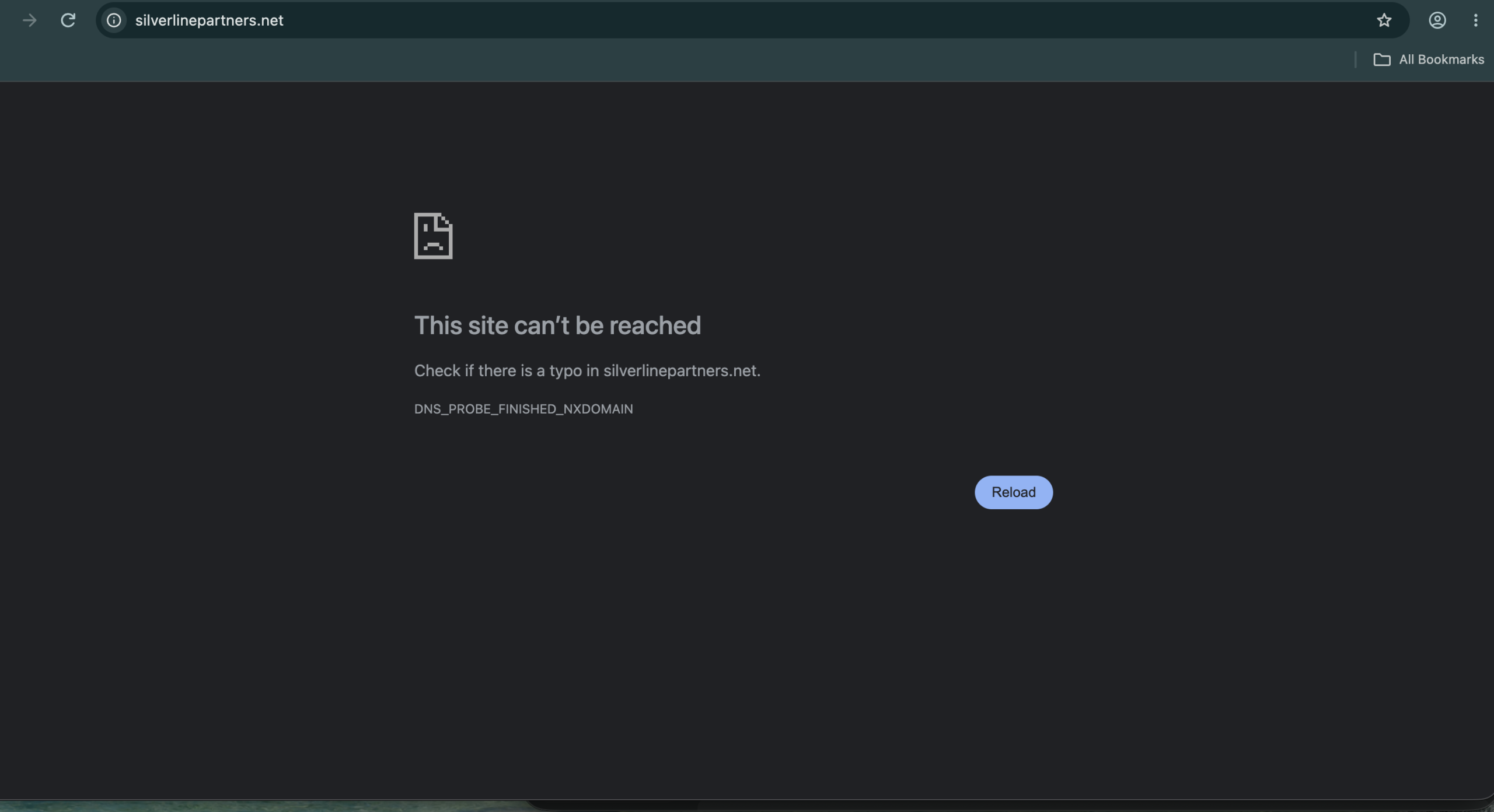
That can be particularly useful when a domain later disappears.
Contact Your Bank or Payment Provider
If you paid by:
- bank transfer;
- debit card;
- credit card;
- cryptocurrency;
- payment application;
contact the relevant provider promptly.
Tell them that you believe the payment may be connected to an investment fraud.
Ask what options remain available for:
- transaction recall;
- fraud investigation;
- chargeback;
- payment dispute;
- account monitoring.
The available options depend on the payment method and circumstances, so early contact is important.
Report the Platform
Investors should consider reporting suspicious activity to the appropriate regulator and fraud-reporting authority in their jurisdiction.
For Québec investors, the AMF has already issued the relevant warning concerning Silverline Partners.
The CSA also maintains investor-alert information from its member regulators.
Reporting can help regulators identify common patterns involving:
- websites;
- telephone numbers;
- bank accounts;
- cryptocurrency wallets;
- individuals;
- company names;
- advertising campaigns.
The 60-Second Investor Safety Test
Before sending money to an unfamiliar investment platform, ask:
| Question | Warning sign |
|---|---|
| Who legally operates the company? | Nobody can give a clear answer |
| Is the company regulated? | No regulator can verify it |
| Does the licence cover the service? | Licence exists but covers another activity |
| Does the regulator recognise the website? | Domain does not match |
| Where will my money be held? | Vague or unexplained answer |
| Who receives my payment? | Unrelated company or individual |
| Can I withdraw without paying more? | Additional-payment demands |
| Am I being pressured? | “Act now” language |
| Are returns guaranteed? | High or fixed returns presented as certain |
| Am I being asked for passwords? | Refuse immediately |
| Am I being asked for remote access? | Refuse immediately |
| Is someone offering recovery for an upfront fee? | Potential recovery scam |
Final Assessment
Silverlinepartners.net requires serious caution, primarily because of an official regulatory warning.
On 28 August 2026, the AMF identified Silverline Partners as a high-risk platform and stated that it was not registered with the AMF and was not authorised to solicit investors in Québec. The warning specifically identifies silverlinepartners.net.
The CSA investor-alert database independently records the same warning.
That regulatory finding is more meaningful than website appearance, testimonials or promotional claims.
At the same time, investors should be precise about what the regulator has actually established. The warning concerns the identified platform and its Québec registration/solicitation status. It should not automatically be applied to every unrelated company using the words “Silverline Partners.”
For investors, the broader lesson is even more important.
A professional investment website is not the same thing as a regulated investment business.
Before sending money, verify:
Who operates it.
Who regulates it.
What license it holds.
Whether the license covers the service.
Where client money is held.
Who receives the payment.
And whether you can withdraw without being asked to send additional money.
If those questions cannot be answered independently, pause before investing.
The strongest protection is not discovering a suspicious platform after money has disappeared.
It is identifying the warning signs before the first transfer is made.

