Executive Overview
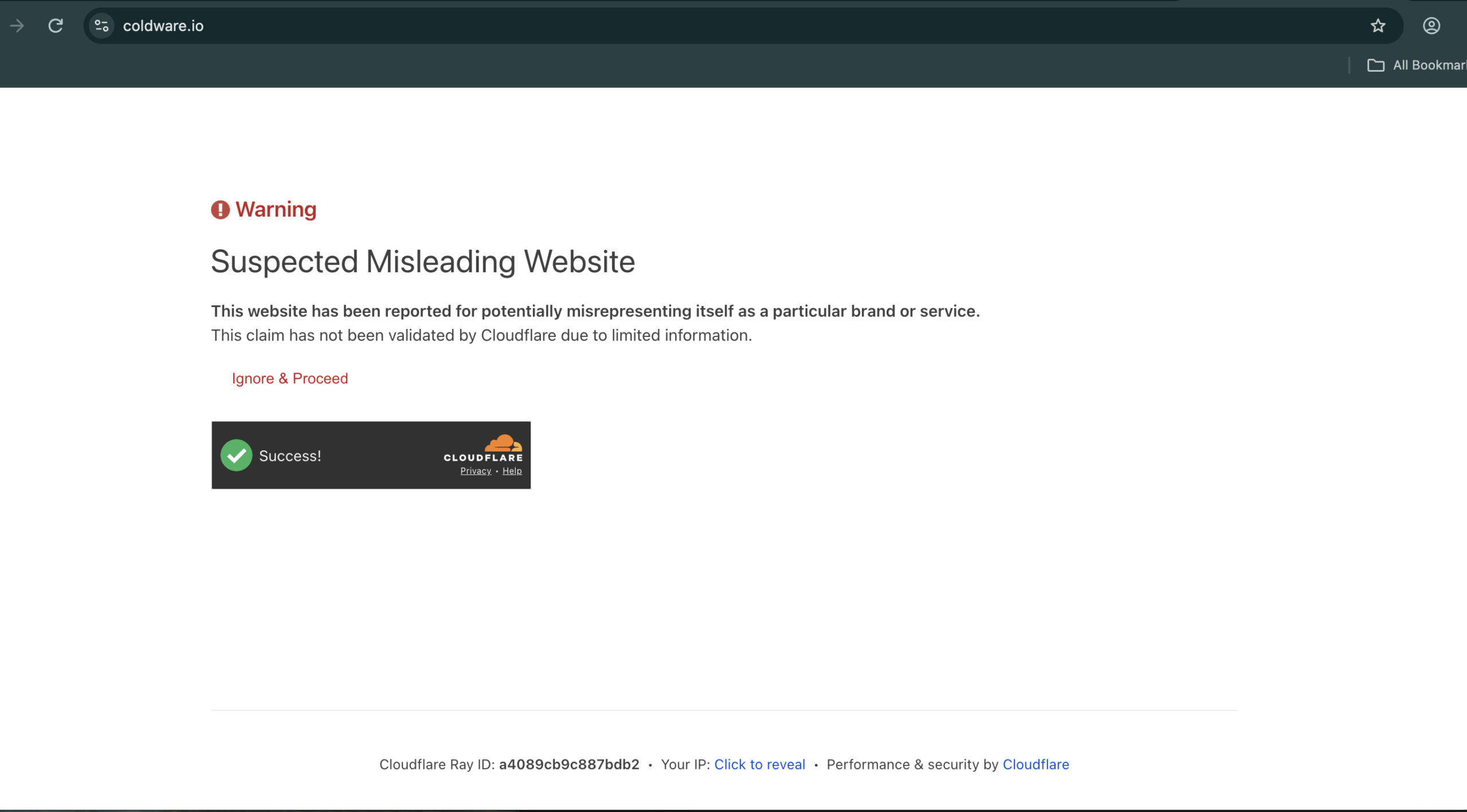
Coldware (coldware.io) should be treated as a high-risk investment opportunity and approached with extreme caution.
The most important fact is that the British Columbia Securities Commission (BCSC) issued an investor alert concerning Coldware on 10 September 2026. coldware.io is also recorded in the IOSCO international warning database, which contains regulatory alerts concerning firms that are not authorized to provide investment services in the jurisdiction issuing the warning.
This regulatory warning is significant. It does not, by itself, establish that every person associated with coldware.io has committed fraud or that every product connected to the project is fraudulent. However, it means investors should not treat coldware.io as an ordinary, independently verified investment provider.
What is Coldware?
coldware.io presents itself as a cryptocurrency/Web3 project built around the COLD token, with plans involving blockchain technology, mobile phones, laptops, wallets, messaging and other hardware/software products.
Its own terms describe Coldware Innovations Ltd as being registered in Seychelles and state that the company provides hardware products rather than cryptocurrency offerings. The same terms also describe COLD as a utility token and acknowledge that cryptocurrency investments can be highly volatile and that investors could lose their entire investment.
This distinction is important.
A project can describe a token as a “utility token” in its own documents, but that description does not automatically determine how financial regulators in different countries will classify or regulate it.
Why the regulatory warning matters
The BCSC warning is the clearest reason for caution.
The Canadian Securities Administrators’ investor-alert database describes these alerts as relating to persons or companies that appear to be engaging in securities activities that may pose a risk to investors. coldware.io is specifically listed under the BCSC with a September 2026 warning.
IOSCO’s I-SCAN database likewise records coldware.io and identifies the British Columbia Securities Commission as the regulator associated with the alert.
For an investor, the practical message is simple:
Do not rely on Coldware’s own description of its business or regulatory position. Verify the project independently through the regulator in your own country.
Additional concerns investors should understand
coldware.io involves a cryptocurrency/token presale environment. That creates risks beyond those found with conventional investments.
The project’s own terms state that COLD can be volatile and that an investor could lose the entire investment. They also state that coldware.io does not guarantee the future value or performance of the token.
Independent website-reputation services have also reported additional warning indicators involving the coldware.io domain, including hidden domain-registration information and cryptocurrency-related risk signals. These services are not financial regulators, so their assessments should be treated as secondary evidence rather than proof of wrongdoing.
There have also been online user allegations concerning the token presale and token distribution. Such individual reports are difficult to independently verify and should not be treated as established facts. They nevertheless demonstrate why investors should independently verify what they are buying rather than relying on promotional material or online testimonials.
How investors can avoid similar platforms
1. Check the regulator before sending money
This should be the first step, not the last.
If you are in the UK, use the FCA Firm Checker and verify:
- the exact legal company name;
- the exact website/domain;
- the firm’s authorization;
- the specific investment services it is permitted to provide.
The FCA states that almost all financial firms operating in the UK must be authorized or registered. It also warns that not appearing on the FCA warning list does not automatically mean a firm is legitimate.
2. Verify the company independently
Do not simply accept:
“We are regulated.”
Ask:
Who regulates you?
Then independently search the regulator’s own database.
A logo, license number, certificate or regulatory claim displayed on a website can be misleading or belong to another company.
3. Check the exact website address
This is particularly important with investment scams.
Fraudulent operators can imitate genuine businesses or use similar names and domains.
The company name, website, license and contact details should all correspond.
A genuine company with a different website does not make the suspicious website genuine.
4. Be extremely careful with cryptocurrency presales
Presales can be particularly difficult for ordinary investors to evaluate.
Before purchasing a token, establish:
- Who legally issues it?
- Where is the issuing company registered?
- Who controls the project?
- Is there a verifiable team?
- Is the token contract independently verifiable?
- What blockchain is being used?
- Can the token actually be transferred?
- Where will it be traded?
- What rights does the token provide?
- What happens if the project fails?
- Which regulator, if any, supervises the activity?
If these questions cannot be answered clearly, investors should stop before sending money.
5. Never assume a professional website means a legitimate investment
A sophisticated website can contain:
- professional graphics;
- charts;
- technical documents;
- company registrations;
- testimonials;
- supposed partnerships;
- countdown timers;
- token prices;
- claimed exchange listings.
None of these independently proves that the investment is legitimate.
The FCA specifically warns that online trading scams can use professional-looking websites and may initially show apparent returns to encourage victims to deposit more money.
6. Watch for pressure
Be cautious if someone tells you:
- “You need to invest today.”
- “This presale is almost sold out.”
- “You will miss the opportunity.”
- “The price is guaranteed to rise.”
- “You can recover your losses with this trade.”
- “Invest more and your returns will increase.”
- “Don’t tell anyone about the opportunity.”
Pressure is designed to reduce the time available for independent checking.
A legitimate investment opportunity should survive a period of careful research.
7. Never pay money to release your money
One of the most important warning signs is being told that you must make another payment before withdrawing your existing funds.
Examples include:
- tax payments;
- release fees;
- withdrawal fees;
- verification fees;
- security deposits;
- account upgrades;
- liquidity charges.
A demand for additional money does not automatically prove fraud, because legitimate financial services can have fees. But a platform demanding further payments as a condition of releasing supposedly available funds deserves extreme caution and independent verification.
Canadian securities regulators specifically identify requests for money when attempting to withdraw funds as a warning sign of investment fraud.
If you have already invested in Coldware
Do not panic and do not send additional money simply because someone promises that another payment will unlock your investment.
Instead:
- Stop additional payments.
- Save screenshots of your account and token balances.
- Save the complete transaction history.
- Keep emails, messages and usernames.
- Record cryptocurrency wallet addresses and transaction hashes.
- Keep copies of withdrawal requests and responses.
- Contact your bank or payment provider immediately if you paid through them.
- Report the matter to the appropriate financial regulator or fraud-reporting authority.
If cryptocurrency was used, preserve the blockchain transaction information. This can be important when reporting what happened.
Beware of recovery scams
Someone who loses money to an investment platform can become a second target.
A person may later contact you claiming to be:
- a recovery specialist;
- a lawyer;
- a government investigator;
- a blockchain expert;
- a cryptocurrency tracing company;
- a financial regulator.
They may promise to recover your money if you first pay a fee.
The FCA specifically warns that victims of investment scams can subsequently be targeted by people offering to recover their money for an additional payment.
Never assume a recovery service is genuine simply because it knows details about your previous loss.
A simple checklist for future investments
Before sending money to an unfamiliar platform, ask:
1. Who exactly owns it?
2. Which regulator authorizes it?
3. Can I independently verify that authorization?
4. Does the regulator authorize the exact service being offered?
5. Where exactly will my money go?
6. Can I withdraw without paying additional money first?
7. Is the investment risk clearly explained?
8. Am I being pressured to act quickly?
9. Did I discover the opportunity independently, or did someone approach me?
10. Would I still invest if I had 48 hours to think about it?
If several answers are unclear, do not transfer money until the questions are independently resolved.
Final Judgement
coldware.io is not simply a platform that should be judged by how professional its website looks.
The BCSC investor warning and its appearance in IOSCO’s international alert records are the most important facts investors should consider.
coldware.io own documentation acknowledges the substantial risks associated with its cryptocurrency/token ecosystem, including the possibility of losing the entire investment.
It would be inappropriate to state, solely on the basis of the regulatory warning, that every aspect of coldware.io is definitively fraudulent. The more accurate conclusion is that investors have sufficient warning signals to require extensive independent verification before committing funds.
The key lesson
Do not judge an investment by its website, its advertised profits or the confidence of the person promoting it.
Judge it by independently verifiable facts:
legal identity → regulator → authorization → custody of funds → withdrawal process → investment risks.
If those facts cannot be independently established, keep your money out.