
Introduction
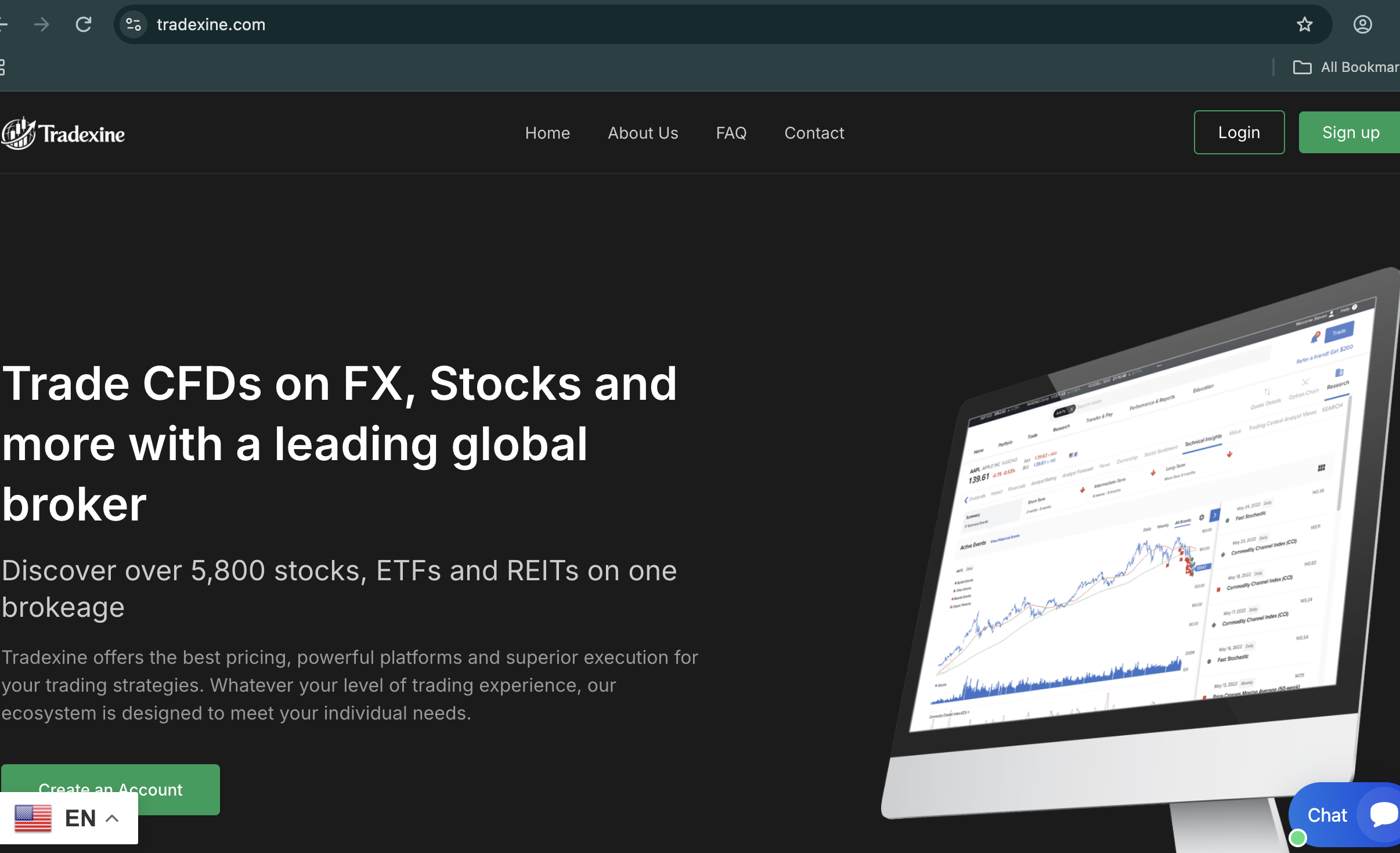
When people research an online investment platform, the first thing they often see is the website itself. A professional design, trading dashboard, account balance, market charts, customer-support chat and promises of advanced trading can create the impression that a company is established and legitimate.
But those features do not establish that an investment business is authorized to provide financial services.
That distinction is particularly important in the case of DevConnects. The British Columbia Securities Commission (BCSC) published an Investment Caution List warning against DevConnects on June 11, 2026. The regulator stated that the company was not registered with the BC Securities Commission and advised people who had been approached by or referred to the entity to proceed with extreme caution before handing over money. The Canadian Securities Administrators’ investor-alert record identifies devconnects.net as the last website used.
This does not by itself establish every allegation that may appear online about the platform. It does, however, establish an important regulatory fact: investors should not treat DevConnects.net as a registered investment business in British Columbia without independently establishing what entity operates the platform, what license it holds, and what activities that licence actually permits.
For investors, the larger lesson is even more important: how can you determine whether an investment platform is authentic before sending money?
1. What the Regulator Actually Says About DevConnects
The most important information should come directly from a financial regulator rather than from advertisements, reviews or the platform itself.
The BCSC’s warning identifies:
- Name: DevConnects
- Regulator: British Columbia Securities Commission
- Warning date: June 11, 2026
- Regulatory finding: DevConnects was not registered with the BCSC
- Website identified: devconnects.net
- Regulatory advice: proceed with extreme caution before handing over money.
The Canadian Securities Administrators’ investor-alert database separately lists DevConnects.net as a BCSC alert dated June 22, 2026 and identifies devconnects.net as the last website used.
This is substantially more meaningful than an anonymous internet review because it comes from the securities regulator responsible for overseeing investment activity in British Columbia.
At the same time, a regulatory warning should be described accurately. It does not automatically mean that every statement made about DevConnects.net online has been proven, nor does it establish the identity of every person operating the website.
The safest interpretation is straightforward:
The platform should not be treated as a properly registered investment provider in British Columbia unless independent evidence establishes otherwise.
2. Regulatory Evidence and Internet Allegations Are Not the Same Thing
Investors frequently encounter several different types of information during an online search.
These should not be treated as equivalent.
Regulatory evidence
Examples include:
- securities commission warnings;
- licence-register entries;
- enforcement decisions;
- official corporate records;
- court documents;
- formal regulatory notices.
These carry the greatest evidentiary weight when establishing regulatory status.
Technical indicators
These can include:
- domain registration information;
- website age;
- hosting information;
- SSL certificates;
- malware or phishing detections;
- website similarities;
- privacy-protected domain ownership.
These can identify potential risk but do not independently establish that an investment company is fraudulent.
User-generated allegations
These include:
- forum complaints;
- social-media posts;
- Reddit discussions;
- review websites;
- Telegram messages;
- comments about withdrawals.
Such reports can be useful leads, but they are not automatically verified evidence.
One third-party website currently publishes a negative technical assessment of devconnects.net, including a low trust score and observations concerning the site’s domain and technical characteristics. That information should be treated as a technical risk indicator rather than a regulatory finding.
A responsible investigation therefore asks:
What can actually be proven, and what is merely being alleged?
3. Why the Registration Question Comes First
An investment website can claim almost anything.
It can say that it is:
- internationally regulated;
- fully licensed;
- authorised to manage investments;
- partnered with major financial institutions;
- protected by insurance;
- compliant with international standards.
None of those statements should be accepted without independent verification.
The first question should instead be:
Who legally operates this platform, and which regulator authorises that entity to provide the specific service being offered?
A genuine licence should be connected to a real legal entity.
The name on the licence should correspond with the company accepting the investor’s money.
The regulator should confirm that the licence is current.
And the authorised activities should correspond with what the platform is actually offering.
4. The Website Is Not the Regulator
One of the biggest mistakes investors make is allowing the platform to become the primary source of evidence about itself.
For example, suppose a website displays:
Licensed and regulated
The next question should be:
Licensed by whom?
Suppose it displays a license number.
The next question should be:
Does that exact license number belong to this exact company?
Suppose it provides a corporate registration number.
The next question should be:
Does that company actually have permission to provide investment services?
Company registration and financial-services authorization are not necessarily the same thing.
A company may exist legally without being authorized to provide the investment product being promoted.
5. DevConnects and the Identity Problem
Before investing, an individual should be able to establish at least four things:
- The legal name of the company.
- The jurisdiction where it is incorporated.
- The regulator responsible for supervising its investment activities.
- The licence or registration that authorizes those activities.
If DevConnects provides an address, telephone number, registration number or regulatory number, investors should independently verify each one.
Do not simply click a verification link supplied by the platform.
Instead, locate the regulator’s official register independently and search for the company.
This prevents a particularly dangerous form of impersonation in which a scam website copies the identity of a genuine financial company.
6. The Licence-Number Test
A license number is not proof of legitimacy until it has been independently verified.
Use this process:
Step 1 — Record the claimed legal entity
Write down the exact name.
Not just the brand.
Not just “DevConnects.”
Find the legal company name appearing in the terms, contracts, invoices or regulatory claims.
Step 2 — Record the claimed licence number
Take a screenshot.
Step 3 — Find the regulator independently
Do not use a link supplied by the salesperson.
Step 4 — Search the regulator’s register
Search:
- legal company name;
- licence number;
- trading name;
- directors where appropriate.
Step 5 — Compare the details
Check:
- company name;
- website;
- address;
- telephone number;
- authorized activities;
- regulatory status.
Step 6 — Investigate discrepancies
If the regulator’s record belongs to another company, another website or another jurisdiction, stop.
This is particularly important because scammers can misuse legitimate licence numbers belonging to unrelated businesses.
Australian financial guidance similarly warns investors that scammers may claim another entity’s licence number or impersonate an authorized financial-services business. It recommends independently checking the relevant professional registers rather than relying on information supplied through advertisements or investment websites.
7. The Website-Address Test
A subtle but powerful verification step is checking whether the regulator’s records identify the same website being used by the investor.
Imagine:
Regulator record: Company ABC — abcfinancial.com
But the person contacting you sends:
abc-financial-invest.com
That difference matters.
Likewise, slight changes such as:
- extra words;
- different domain extensions;
- additional hyphens;
- unusual subdomains;
- replacement letters;
- newly created domains;
can indicate impersonation or a completely different business.
The domain should therefore be treated as part of the company’s identity.
8. HTTPS Does Not Mean Investment Regulation
A padlock symbol beside a website address only indicates that the connection is encrypted.
It does not establish:
- that the company is licensed;
- that the company is financially sound;
- that funds are segregated;
- that trades are genuine;
- that withdrawals will be honoured;
- that regulators supervise the business.
A fraudulent website can also use HTTPS.
Therefore:
SSL security ≠ financial authorization.
9. Do Not Treat the Trading Dashboard as Proof
A particularly convincing feature of modern investment scams is the online dashboard.
An investor may see:
- account equity;
- daily profits;
- open positions;
- trading history;
- charts;
- transaction records;
- cryptocurrency balances;
- portfolio growth.
It can look exactly like a genuine trading environment.
But an account displayed on a website is still information controlled by that website.
A number such as:
$87,450 balance
does not independently establish that $87,450 exists in a bank account, brokerage account or blockchain wallet belonging to the investor.
This is why the underlying custody arrangement matters.
10. The Withdrawal Test
Withdrawal behaviour can reveal more than a polished website.
Investors should understand the withdrawal procedure before depositing substantial funds.
Ask:
- Where are client funds held?
- Who is the custodian?
- Can withdrawals be made directly?
- Are there conditions attached?
- Are withdrawal fees clearly disclosed in advance?
- Are taxes withheld legally and transparently?
- What happens if the account is closed?
- Which legal entity processes the withdrawal?
One of the recurring patterns identified by Australian Scamwatch is the use of fake crypto-trading platforms that display apparently profitable accounts and later demand additional fees before supposedly releasing assets. Scamwatch warns that the displayed trading activity may be fake and that fees requested to release the assets can themselves be part of the scam.
A demand for money before withdrawal should therefore trigger a complete reassessment.
11. The “Pay More to Get Your Money” Problem
Be particularly cautious if an investor is told:
“Your funds are available, but you must make another payment first.”
The requested payment might be described as:
- tax;
- withdrawal clearance;
- compliance fee;
- blockchain activation;
- account verification;
- liquidity fee;
- insurance;
- security deposit;
- AML charge;
- wallet activation;
- conversion fee.
A legitimate financial business can charge legitimate fees, so the existence of a fee alone does not prove wrongdoing.
The important question is whether the fee is:
- disclosed before the transaction;
- contractually documented;
- consistent with the regulatory framework;
- payable through a legitimate channel;
- independently verifiable.
If the investor is being asked to send additional money simply to unlock an apparently existing balance, extreme caution is appropriate.
12. Guaranteed Returns Should Be Treated as a Major Warning Sign
Investment returns involve risk.
Claims such as:
- guaranteed profits;
- risk-free trading;
- fixed daily returns;
- guaranteed cryptocurrency profits;
- guaranteed AI trading performance;
- no-loss strategies;
should receive immediate scrutiny.
The Australian Securities and Investments Commission’s MoneySmart guidance specifically warns investors to question offers promising high returns with little or no risk and to avoid making decisions based only on testimonials, social media or online reviews.
The fundamental question is:
Where does the return actually come from?
If the explanation is vague, highly technical or dependent entirely on trust in an account manager, stop and investigate.
13. AI and Professional-Looking Websites Are Not Proof
Modern investment scams can look remarkably convincing.
Regulators now warn that artificial intelligence can be used to generate:
- investment websites;
- fake reviews;
- social-media profiles;
- fabricated news articles;
- professional-looking advertisements;
- deepfake videos;
- fake endorsements.
MoneySmart specifically warns that a quick internet search is no longer sufficient to establish whether an investment is genuine or whether the person promoting it is licensed.
This means investors should not ask:
“Does this look professional?”
They should ask:
“Can the claims be independently verified?”
That is a much stronger test.
14. The Identity-Matching Test
A genuine investment company should be able to withstand identity verification.
Compare the information across:
- regulator records;
- corporate registries;
- official company documents;
- terms and conditions;
- privacy policy;
- invoices;
- payment instructions;
- bank-account ownership;
- customer-support information.
Look for consistency.
For example:
Website: DevConnects
Contract: Company ABC Ltd
Payment recipient: Company XYZ
Licence: Company DEF
Email domain: unrelated domain
That would create a serious identity mismatch.
The greater the number of unexplained inconsistencies, the greater the need to stop and investigate.
15. Follow the Money
An important part of due diligence is determining exactly where the money goes.
Before transferring funds, identify:
Bank transfer
Who owns the receiving bank account?
Does the beneficiary match the regulated entity?
Credit or debit card
Who is the merchant?
Does the merchant name correspond with the investment business?
Cryptocurrency
Which wallet receives the cryptocurrency?
Is the wallet controlled by the claimed business?
Can the transaction be independently traced?
Payment processors
Is a third-party payment processor being used?
Why?
What legal relationship exists between the processor and investment company?
The name receiving the money should make sense in relation to the legal entity offering the investment.
16. Cryptocurrency Requires an Additional Verification Layer
Crypto-based platforms require additional caution because blockchain transfers are generally difficult to reverse.
Before sending cryptocurrency, record:
- receiving wallet address;
- network;
- token;
- transaction amount;
- transaction hash;
- destination;
- stated purpose of payment.
Do not assume that because an address is visible on a blockchain explorer, it belongs to the company claiming ownership.
Blockchain records can demonstrate that a transaction occurred.
They do not automatically prove who controls the destination wallet.
17. Social Media Should Be Treated as Lead Generation, Not Proof
Many suspicious investment opportunities begin through:
- Facebook;
- Instagram;
- Telegram;
- WhatsApp;
- YouTube;
- TikTok;
- LinkedIn;
- private investment groups.
A large following does not establish regulatory status.
Neither do testimonials.
Neither does a celebrity endorsement.
Neither does a screenshot showing another investor making money.
MoneySmart specifically recommends independent research and warns against relying on testimonials, celebrity endorsements, social-media posts or online reviews as proof of legitimacy.
18. A Three-Layer Authenticity Test
A useful way for investors to evaluate an unfamiliar platform is to divide verification into three layers.
Layer 1 — Identity
Determine:
- Who owns the business?
- What is the legal entity?
- Where is it incorporated?
- Who are its directors?
- What website does the legal entity actually operate?
If identity cannot be established, stop.
Layer 2 — Authorization
Determine:
- Which regulator oversees it?
- What licence does it hold?
- Is the licence current?
- Does the licence cover the product being offered?
- Does the regulator’s record match the website?
If authorisation cannot be independently confirmed, stop.
Layer 3 — Operations
Determine:
- Where client money is held;
- how trades occur;
- how withdrawals work;
- who receives payments;
- what happens when an account is closed;
- what protections apply if the business fails.
A platform should pass all three layers before an investor considers depositing substantial money.
19. A Six-Question Platform Authenticity Checklist
Before transferring money, ask:
1. Who exactly is taking my money?
Find the legal entity.
2. Who regulates that entity?
Identify the actual regulator.
3. Can I independently verify the license?
Never rely solely on the company’s own claim.
4. Does the license cover the service being offered?
A license for one activity does not necessarily authorize every financial product.
5. Where exactly will my money go?
Verify the bank, payment processor or cryptocurrency destination.
6. Can I withdraw without paying unexpected additional money?
Understand this before depositing.
If several answers remain unclear, the appropriate response is to pause rather than continue funding the account.
20. Use Official Warning Lists — But Understand Their Limits
Regulatory warning lists are valuable because they can reveal entities that regulators have identified as presenting a risk.
The CSA describes its investor-alert database as a tool to assist the public and securities industry with due diligence, covering people or companies that appear to be engaging in securities activities that may pose risks to investors.
However:
Not appearing on a warning list does not automatically mean a company is legitimate.
A regulator may not yet have investigated a company.
The company may operate under another name.
The website may be new.
The business may be outside the regulator’s jurisdiction.
The investor may also be dealing with an impersonator.
Therefore, warning-list searches should be only one part of the investigation.
21. Check the Investor’s Own Jurisdiction
An investor should check the regulator relevant to their own country.
For example, Australian investors should establish whether the business or representative is appropriately authorized under Australia’s financial-services framework.
MoneySmart recommends checking ASIC’s professional registers, verifying the exact license holder and ensuring that the website being used corresponds with the information in the register. It also warns that company registration alone does not establish authorization to provide financial services.
The same principle applies internationally:
Check the regulator that actually has jurisdiction over the investor and the service being offered.
22. Do Not Confuse Company Registration With Financial Licensing
This is a common mistake.
A website may provide:
“Company registered in Country X.”
That only establishes, at most, that an entity with that name exists in a corporate registry.
It does not necessarily establish that the entity can:
- manage investments;
- provide financial advice;
- operate a securities platform;
- handle client assets;
- provide derivatives;
- offer cryptocurrency services.
Corporate existence and financial authorization are separate questions.
23. What About a Foreign Registration?
Offshore registration should receive additional scrutiny, not automatic acceptance.
If a platform claims to operate from another country, verify:
- exact legal entity;
- company number;
- physical address;
- regulator;
- licence;
- authorised activities;
- directors;
- website;
- payment arrangements.
Then compare all of those details with what the platform itself tells investors.
An address appearing on a website is not independently verified merely because it exists.
24. A Practical 10-Minute Vetting Procedure
Investors do not need to become professional investigators to perform an initial check.
Minute 1 — Identify the legal entity
Write down the exact corporate name.
Minute 2 — Identify the regulator
Determine which regulator supposedly supervises it.
Minute 3 — Search the regulator
Look for the exact legal name and licence number.
Minute 4 — Compare the website
Does the regulator’s record identify the same website?
Minute 5 — Check the authorised activities
Does the licence cover what the platform is offering?
Minute 6 — Check the payment recipient
Does the beneficiary match the company?
Minute 7 — Read the withdrawal terms
Look for unexpected conditions and charges.
Minute 8 — Search official warnings
Check the regulator’s warning and investor-alert databases.
Minute 9 — Look for identity inconsistencies
Compare names, addresses, emails and payment information.
Minute 10 — Stop if something does not make sense
Do not allow a salesperson to pressure you into resolving unanswered questions by depositing more money.
25. Red-Flag Matrix
| Warning sign | Why it matters |
|---|---|
| No verifiable licence | Regulatory status cannot be independently established |
| Licence belongs to another company | Possible impersonation |
| Website does not match regulator records | Possible identity mismatch |
| Anonymous management | Makes accountability difficult |
| Guaranteed returns | Inconsistent with normal investment risk |
| Pressure to deposit immediately | Reduces time for due diligence |
| Large profits shown immediately | Account figures may not prove real assets |
| Unexpected withdrawal payment | Requires independent verification |
| Crypto-only payments | Transfers may be difficult to reverse |
| Personal bank account requested | May indicate improper payment routing |
| Telegram/WhatsApp-only support | Limited accountability |
| Fake celebrity endorsement | Social proof can be manufactured |
| AI-generated testimonials | Visual evidence can be fabricated |
| Changing domains | Makes identity verification harder |
| Refusal to provide legal documents | Prevents meaningful due diligence |
One warning sign does not necessarily establish wrongdoing.
Several unexplained warning signs together deserve much greater scrutiny.
26. If You Have Already Deposited Money
The priority should be preserving evidence rather than arguing with the platform.
Save:
- screenshots of the account;
- account statements;
- deposit confirmations;
- withdrawal requests;
- emails;
- WhatsApp messages;
- Telegram conversations;
- telephone numbers;
- names used by representatives;
- contracts;
- invoices;
- payment instructions;
- bank details;
- cryptocurrency wallet addresses;
- transaction hashes.
Do not delete conversations because they are embarrassing.
Do not assume that losing money means you were careless.
Investment fraud is designed to create trust, urgency and emotional commitment. Anyone can be targeted.
27. Do Not Send More Money Simply Because the Platform Promises a Withdrawal
If the platform says:
“Pay this amount and your withdrawal will be released.”
Pause.
Do not borrow money.
Do not sell property.
Do not take out another loan.
Do not transfer cryptocurrency simply because the account manager says the payment is the final requirement.
Seek independent verification first.
Scamwatch has specifically warned about fake crypto-investment platforms that display supposed profits and then demand fees before releasing assets.
28. Be Careful With Recovery Scams
A second danger can appear after the original investment loss.
Someone may contact the victim claiming:
- they can recover the money;
- they have traced the cryptocurrency;
- they work with a regulator;
- they are lawyers;
- they are blockchain investigators;
- they have access to the original scammers;
- the money is already recovered.
Then they request:
- an upfront fee;
- cryptocurrency;
- wallet credentials;
- remote computer access;
- banking information;
- passwords;
- one-time security codes.
This should be treated with extreme caution.
A person who has already lost money is particularly vulnerable to promises of quick recovery.
29. The Most Important Rule for Investors
The person selling the investment should not be the person responsible for proving that the investment is legitimate.
Verification should happen independently.
That means:
The platform says it is licensed → check the regulator.
The platform says the company exists → check the corporate record.
The platform says the licence covers trading → check the authorised activities.
The platform says your funds are held somewhere → verify the custody arrangement.
The platform says you have profits → verify whether those assets actually exist.
The platform says you must pay before withdrawing → independently verify the reason.
30. Stop, Check, Protect
A simple framework investors can remember is:
STOP
Do not send money simply because someone is applying pressure.
CHECK
Verify the legal entity, regulator, licence, website, payment recipient and withdrawal arrangements independently.
PROTECT
Keep evidence, secure accounts and never provide passwords, private keys, seed phrases, one-time codes or remote computer access.
MoneySmart’s current investor guidance similarly structures investment-scam prevention around stopping before acting, checking licensing and identity independently, and understanding what happens if something goes wrong.
Final Investor Perspective
The documented regulatory issue surrounding DevConnects is significant: the British Columbia Securities Commission states that DevConnects was not registered with the commission and warned people approached by the entity to proceed with extreme caution before handing over money. The CSA’s investor-alert database identifies devconnects.net as the website associated with the warning.
That finding should be kept separate from unverified internet allegations or automated website-risk scores.
For investors, however, the broader lesson is clear.
A convincing website is not proof of a legitimate investment business.
A trading dashboard is not proof that funds exist.
A licence number is not proof until the regulator confirms it.
A company registration is not the same as financial authorisation.
A successful small withdrawal does not establish that a platform is legitimate.
And a warning-free search result does not establish that a company is authorised.
The safest approach is to verify identity, authorisation and operations independently before money is transferred.
Behind every investment is a real person and, often, years of savings. Due diligence is therefore not simply about finding a professional-looking website. It is about establishing who is legally responsible for the investment, who regulates them, where the money goes, what protections exist, and whether the promised withdrawal process actually makes sense.
When those answers cannot be independently established, the sensible response is not to invest first and investigate later.
It is to pause, verify and protect the money before it leaves your control.