
The Question Every Investor Should Ask First
When an investment platform approaches you online, the first question should not be:
“How much can I make?”
It should be:
“Who is legally authorized to take my money?”
That question is particularly important when considering Elevon Partners.
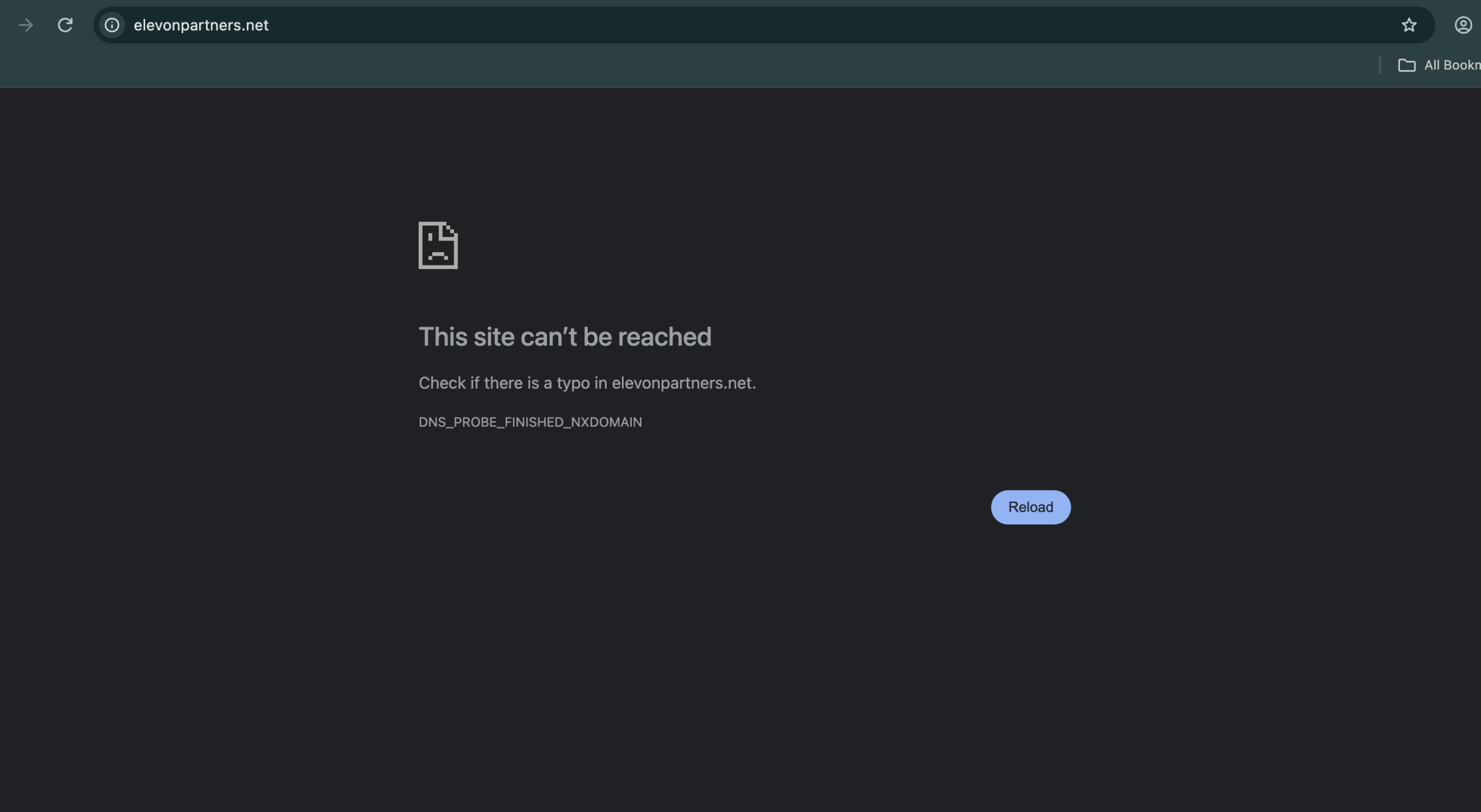
On August 21, 2026, the Autorité des marchés financiers (AMF) issued an investor warning concerning Elevon Partners. The regulator states that Elevon Partners is not registered with the AMF and is not authorized to solicit investors in Québec. The AMF categorizes the platform under cryptoassets, forex and high-risk platforms.
The Canadian Securities Administrators (CSA) investor-alert database records the same warning and identifies Zurich, Switzerland as the purported base of operation.
That does not mean that every claim ever made about Elevon Partners has been legally established. It does mean that investors have an official regulatory warning that should be considered before providing money or personal information.
1. What Does the Regulatory Warning Actually Mean?
This is the most important part of the investigation.
The AMF is not simply reviewing the appearance of Elevon Partners’ website. Its warning addresses the platform’s regulatory status.
According to the AMF:
Elevon Partners is not registered with the AMF and is not authorized to solicit Québec investors.
The CSA database repeats this information and lists Elevonpartners.net among investor alerts intended to help the public conduct due diligence concerning entities that may pose risks to investors.
For a prospective investor, this raises an immediate issue.
If an investment company wants your money, you should be able to determine:
- Which legal entity is receiving it
- Where that entity is registered
- Which regulator supervises it
- What activities it is authorized to perform
- What investor protections apply
If those questions cannot be answered independently, the investor should slow down rather than deposit money.
2. Why Does Registration Matter So Much?
Registration is one of the first lines of defence available to investors.
It can establish that a company or individual has entered the regulatory framework applicable to the financial services it provides.
Depending on the jurisdiction and registration category, regulatory requirements can concern:
- Business conduct
- Supervision
- Financial reporting
- Compliance
- Conflicts of interest
- Handling of client assets
- Complaints
- Capital requirements
- Enforcement
This is why an investor should not accept statements such as:
“We are a professional investment company.”
The important question is whether the company’s legal status can be independently verified.
The AMF itself advises investors to consult its registers before dealing with an investment firm or individual to determine whether they are authorized to conduct the relevant activities.
3. The Website Is Not the Evidence
One of the easiest mistakes to make is trusting a website because it looks professional.
An investment website can contain:
- Professional photographs
- Corporate biographies
- Market analysis
- Trading charts
- Investment strategies
- Risk disclosures
- Account dashboards
- Customer-support channels
- Financial terminology
But none of these independently establish regulatory authorization.
This is increasingly important because regulators are dealing with large numbers of fraudulent or unauthorized online investment websites.
The CSA and CIRO have reported extensive efforts to identify and deactivate fake investment platforms and associated websites.
Therefore, investors should reverse the usual process.
Do not start with:
“The website looks legitimate, so I will investigate further.”
Start with:
“I will verify the company first, then examine the website.”
That simple change can dramatically improve due diligence.
4. Who Actually Controls the Money?
An investment platform may tell you that your money is being invested.
But an investor should be able to determine where the money actually goes.
Before depositing, ask:
Who receives my money?
Is the recipient a regulated financial institution?
In whose name is the account?
Does it match the company supposedly providing the investment?
Where is the money held?
Is there an identifiable custodian or financial institution?
What happens if I want my money back?
Is there a clearly documented withdrawal procedure?
Who is responsible for the assets?
Can that person or company be independently verified?
If the answers come only from the platform’s sales representative, the investigation is incomplete.
5. Don’t Confuse an Account Balance With Real Wealth
This is one of the most important lessons for online investors.
Imagine logging into a platform and seeing:
Available balance: $42,800
It can feel like proof that your investment has grown.
But a number displayed inside a website is not independent evidence that $42,800 is actually available to you.
Investors should distinguish between:
Displayed value
and
verifiable assets.
The difference becomes particularly important when an investor attempts to withdraw the money.
6. The Withdrawal Test
For many investors, the real problems with an online platform do not become obvious when money is deposited.
They become obvious when money is requested back.
A platform might say that a withdrawal requires an additional:
- Tax payment
- Verification charge
- Insurance fee
- Compliance payment
- Security deposit
- Account upgrade
- Release fee
- Transaction charge
Some financial services legitimately charge fees or require taxes.
Therefore, an additional payment alone does not establish wrongdoing.
The important question is:
Can the requirement be independently verified?
The CSA identifies demands for money when investors attempt to withdraw funds as a warning sign associated with investment fraud.
If a platform says:
“Send another $5,000 and then you can withdraw your $30,000.”
the investor should not automatically assume that paying the $5,000 will solve the problem.
Stop.
Verify.
Investigate.
7. The Deposit Escalation Trap
Another pattern investors should recognize is escalating deposits.
It may begin with a small investment.
Then the representative may encourage the investor to deposit more because:
- The account has reached a new level
- A bigger trade is available
- Higher returns are supposedly available
- A VIP account is required
- A special opportunity is closing
- Additional capital is needed to recover losses
The investor may gradually move from hundreds to thousands and eventually tens of thousands of dollars.
At that point, the investor may feel trapped.
They may think:
“I’ve already invested so much. I have to put in more or I will lose everything.”
That is precisely when an investor should step away.
Previous deposits are not a reason to make another deposit.
8. Pressure Changes the Investment Decision
Legitimate investment decisions should leave room for independent research.
Be cautious when someone insists that you must act immediately.
Warning signs can include:
- “Deposit today.”
- “This opportunity disappears tonight.”
- “Your account manager has reserved the trade.”
- “You must upgrade immediately.”
- “The market is about to move.”
- “You cannot miss this opportunity.”
The CSA identifies pressure to invest quickly as one of the warning signs investors should watch for.
A simple rule can help:
Give yourself 24 hours before making a significant new investment.
During that period, independently verify the company.
If the opportunity disappears because you took time to investigate it, that is preferable to losing money because you were pressured into acting quickly.
9. What About High or Guaranteed Returns?
Investors should also examine the way returns are presented.
Be cautious about statements suggesting that an investment is:
- Guaranteed
- Risk-free
- Certain to succeed
- Protected from market losses
- Capable of generating unusually high returns with little risk
The CSA identifies guaranteed or unusually attractive returns as common warning signs of investment fraud.
Every legitimate investment involves some relationship between risk and potential return.
The more attractive the promised return appears, the more carefully the investor should investigate how that return is supposedly generated.
10. Why Crypto and Forex Require Additional Caution
The AMF specifically categorizes the Elevon Partners warning under cryptoassets and forex, as well as high-risk platforms.
These markets can expose investors to additional risks involving:
- Leverage
- Rapid price movements
- Complex financial products
- Cryptocurrency transfers
- Difficult-to-understand fees
- Offshore counterparties
- Limited investor protections
This makes independent verification even more important.
A platform should not be trusted simply because it displays live cryptocurrency prices or sophisticated forex charts.
A trading interface is technology.
It is not regulatory authorization.
11. Never Give an Online Investment Representative Control of Your Device
Investors should be particularly careful if someone asks them to install software or provide remote access to a computer or phone.
A supposed investment representative might claim that remote access is necessary to:
- Set up an account
- Fix a trading problem
- Complete a withdrawal
- Connect a wallet
- Verify a transaction
The CSA identifies unsolicited requests for access to devices as a warning sign.
Never give an unknown person:
- Banking passwords
- Two-factor authentication codes
- Wallet seed phrases
- Private keys
- Password-reset codes
- Remote control of your computer
12. The Identity Check Most Investors Skip
Before investing, create a simple identity chain:
Platform name
↓
Legal company
↓
Country of registration
↓
Regulator
↓
Registration number
↓
Authorized activities
↓
Receiving financial institution
Every step should be independently verifiable.
If one link is missing, do not assume the rest is correct.
A company can have a genuine corporate registration while still lacking the authorization necessary to provide investment services.
Likewise, a legitimate company with a similar name may have nothing to do with the website contacting you.
13. What If Someone Says They Are “Regulated”?
Do not accept the statement at face value.
Ask:
Regulated by whom?
Then independently verify it.
Do not click a regulatory logo supplied by the investment website and assume that it proves anything.
Go directly to the regulator’s own records.
The AMF specifically recommends checking its registers before doing business with an investment firm or individual.
This is one of the simplest and most effective investor-safety habits.
14. What If You Have Already Deposited Money?
The priority should be to prevent the situation from becoming worse.
Do not automatically make another deposit because someone says it will unlock an existing balance.
Instead, preserve evidence.
Keep:
- Emails
- Text messages
- WhatsApp conversations
- Telegram conversations
- Account screenshots
- Deposit receipts
- Withdrawal requests
- Contracts
- Invoices
- Names of representatives
- Phone numbers
- Email addresses
- Bank information
- Cryptocurrency wallet addresses
- Blockchain transaction hashes
These records can become extremely important when determining what happened.
If money was transferred through a bank, card or payment service, contact the relevant provider promptly and ask what options are available.
The sooner an investor raises a potential fraud issue, the more useful the available transaction information may be.
15. A Better Way to Evaluate Any Online Investment
Instead of trying to determine whether a platform “looks legitimate,” use five stages.
STAGE ONE — IDENTITY
Who owns it?
Find the legal entity.
STAGE TWO — AUTHORIZATION
Who regulates it?
Verify the registration independently.
STAGE THREE — MONEY
Where does the deposit go?
Identify the actual recipient.
STAGE FOUR — ACCESS
How do withdrawals work?
Understand the process before investing.
STAGE FIVE — PRESSURE
Are you being rushed?
If yes, stop and investigate.
This five-stage process is much more reliable than judging a website by its appearance.
16. The Investor’s Red-Flag Matrix
| What You See | What You Should Ask |
|---|---|
| Professional website | Who regulates the company? |
| Trading dashboard | Are the underlying assets independently verifiable? |
| High projected returns | What risk produces these returns? |
| Urgent investment offer | Why can’t I take time to investigate? |
| “Guaranteed” profits | How can investment returns be guaranteed? |
| Withdrawal fee | Can this requirement be independently verified? |
| More money requested | Why must I pay more before accessing my own funds? |
| Crypto payment | Who controls the receiving wallet? |
| Remote-access request | Why does an investment representative need my device? |
| Regulatory certificate | Can the regulator independently confirm it? |
| Positive testimonials | Can the claims be independently verified? |
| Foreign corporate address | Does the legal entity actually exist there? |
17. The Three Questions That Can Prevent Major Losses
Before investing with any unfamiliar platform, ask three questions.
Question One
Can I independently verify that this company is authorized to provide the investment service?
If not, stop.
Question Two
Can I independently verify where my money will be held?
If not, stop.
Question Three
Can I withdraw without being pressured to send additional money?
If the answer is unclear, stop.
These three questions are often more valuable than reading dozens of pages of promotional material.
18. What the Elevon Partners Warning Teaches Investors
The Elevonpartners.net case demonstrates a broader problem with online investing.
Investors often spend considerable time examining:
- Potential returns
- Trading strategies
- Cryptocurrency prices
- Portfolio projections
- Market opportunities
But the most important research can happen before any of that.
Who is actually offering the investment?
In Elevon Partners’ case, the AMF’s warning provides an important answer for Québec investors: the entity was not registered with the AMF and was not authorized to solicit investors in Québec.
That fact should be considered before any money is transferred.
Final Investor Perspective
The most useful lesson from the Elevonpartners.net warning is not simply to avoid one particular website.
It is to develop a better way of evaluating unfamiliar investment opportunities.
A convincing website can be created.
A trading dashboard can be created.
A professional-looking document can be created.
A persuasive investment representative can be created.
But regulatory registration must be independently verifiable.
That is why investors should begin their research with the regulator rather than the investment platform.
For Elevonpartners.net specifically, the AMF’s August 21, 2026 warning identifies the platform as a high-risk operation and states that it is not registered with the AMF or authorized to solicit Québec investors.
For investors considering any similar platform, the safest approach is straightforward:
Verify the company.
Verify the regulator.
Verify the investment.
Verify where the money goes.
Verify the withdrawal process.
Then decide whether to proceed.
If those facts cannot be independently established, the investor should not allow an attractive website, persuasive salesperson or promise of high returns to make that decision for them.
Trust should come after verification — never before it.

